
Conductivity control is the foundation of every cooling tower water treatment programme. It keeps dissolved solids from concentrating to the point of scale formation, and it triggers the bleed-and-dose cycle...
Category Overview
Feedback-Driven Water Treatment for Recirculating Cooling Systems
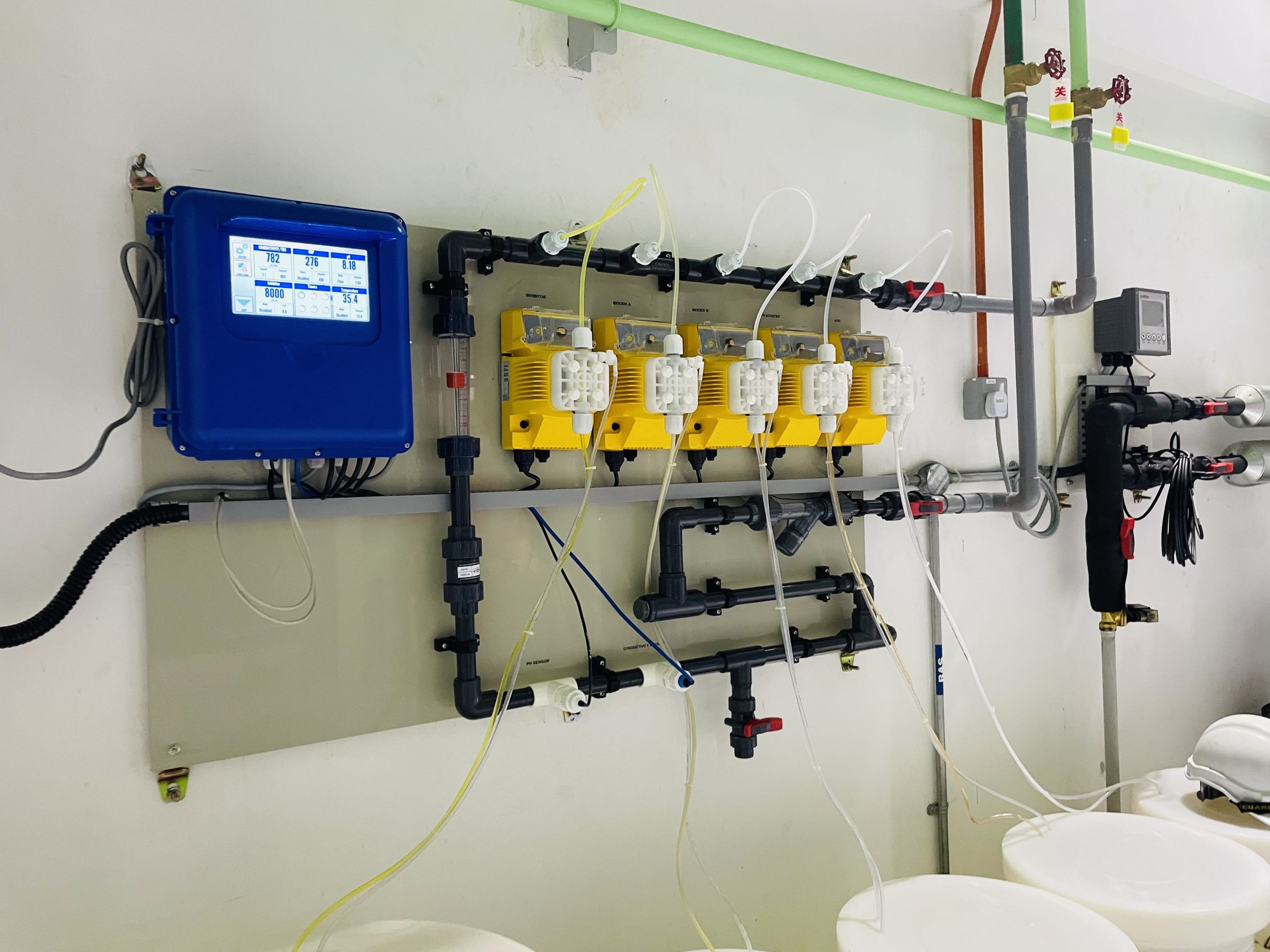
Cooling towers concentrate minerals and contaminants through continuous evaporation, making scale, corrosion and biological growth a constant risk to chiller and condenser performance. Our systems replace guesswork and timer-based dosing with real-time sensor feedback, automatically adjusting blowdown and chemical dosing to match actual water conditions.
Configurations scale from a straightforward conductivity-controlled bleed-off through to fully instrumented, telemetry-connected systems built to compete with premium branded controllers — sized to match the budget and risk profile of each site.
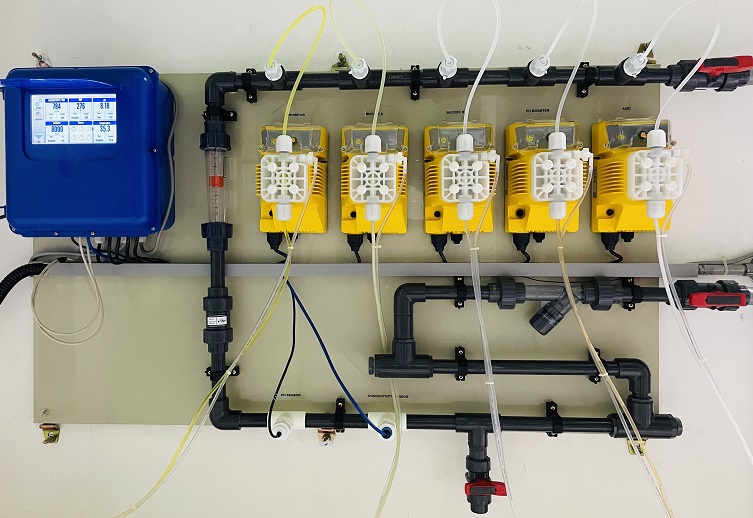
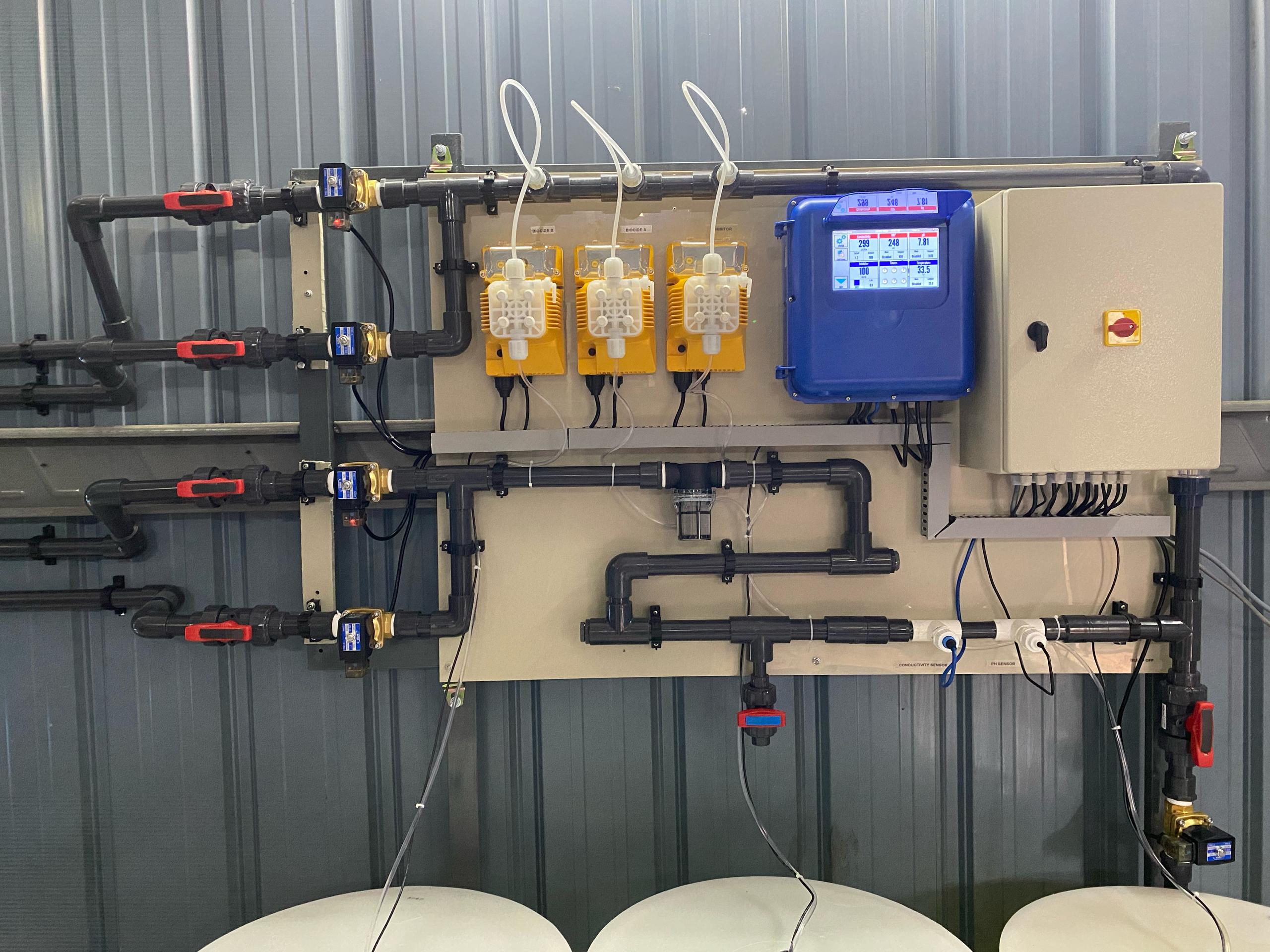
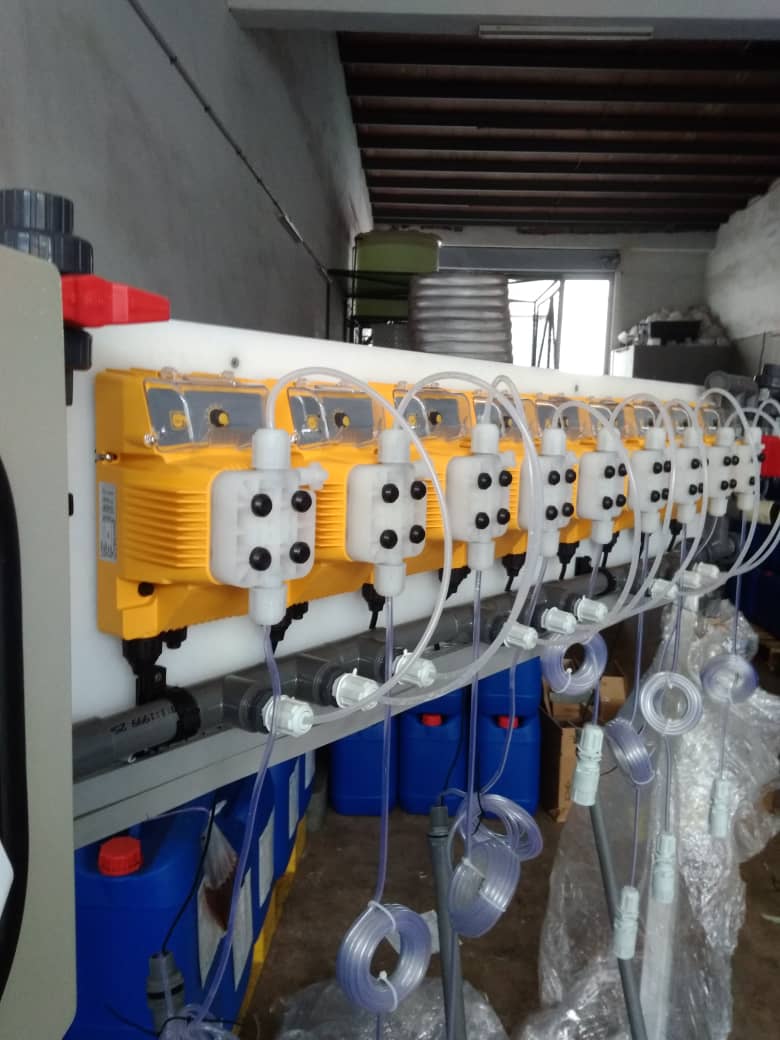
Scalable by parameter — start with conductivity-based blowdown control and up to three chemical dosing pumps, then add pH and ORP monitoring as tighter control is needed
Entry to advanced controllers — Injecta Nexus single-parameter controllers with Olimpia or Athena dosing pumps for standard sites, stepping up to the multi-parameter Aquarius Ultima for larger or higher-risk systems
Full instrumentation option — Aquarius Ultima paired with Pyxis tagged polymer, PTSA, corrosion rate and turbidity sensors, with 4G, WiFi and MODBUS RS485 connectivity for remote monitoring
Built-in corrosion monitoring — every configuration can be fitted with a corrosion rack for ongoing metal-loss verification
Browse by System
Cooling Tower System Types
Type 01
Systems & Solutions
Dosing & Monitoring for Chemical Water Treatment
Conductivity-controlled blowdown with up to three chemical dosing pumps as standard, scalable to pH and ORP monitoring. Ranges from the Injecta Nexus with Olimpia or Athena pumps through to the Aquarius Ultima with full Pyxis sensor instrumentation.
View Models Type 02
Systems & Solutions
Monitoring for Non-Chemical Water Treatment
For towers using non-chemical treatment methods, the Aquarius Ultima monitors conductivity, pH, ORP, turbidity and corrosion rate — with an optional algae sensor — to verify treatment performance without dosing any chemicals.
View Models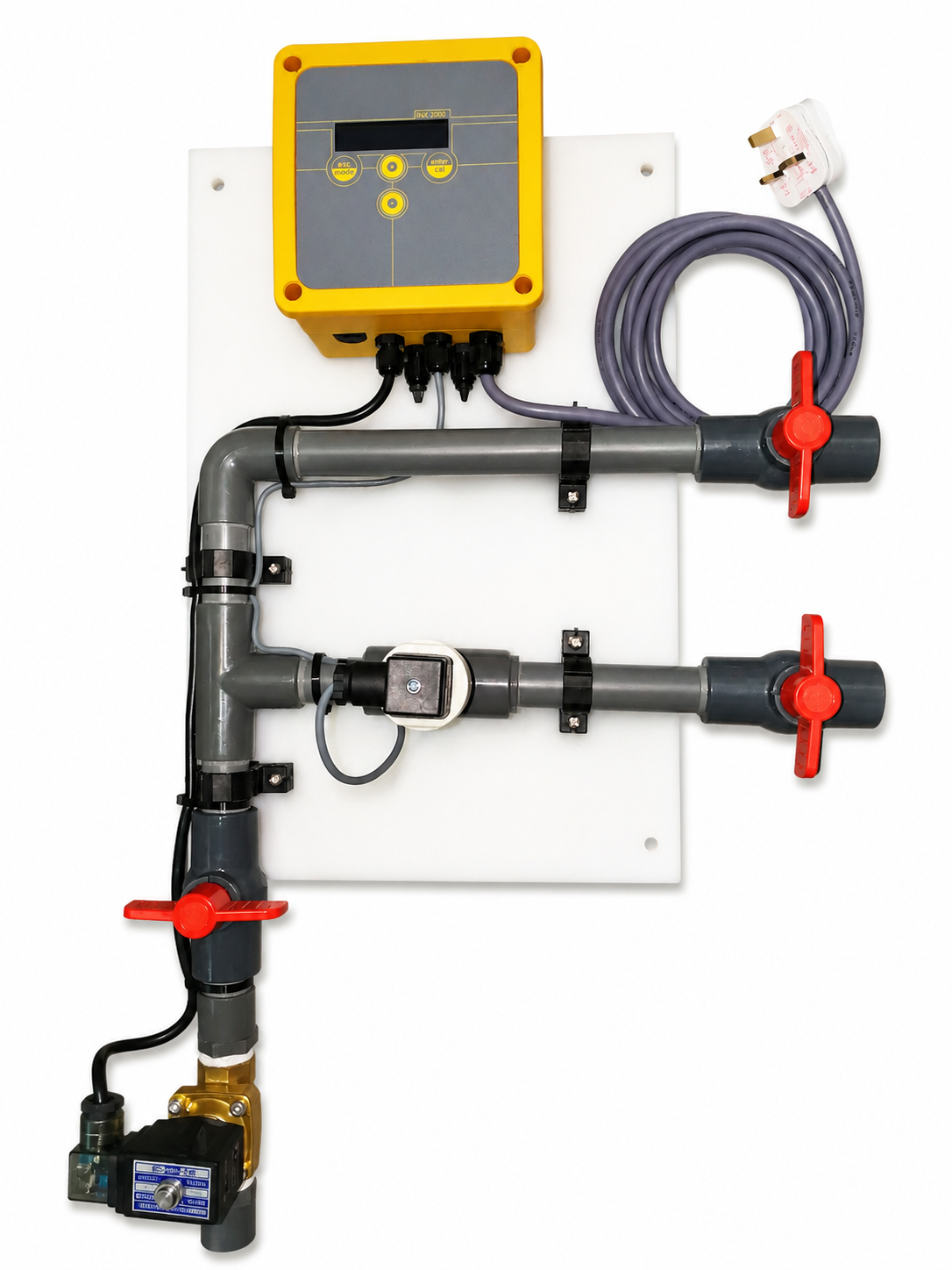 Type 03
Systems & Solutions
Automatic Bleed-Off System
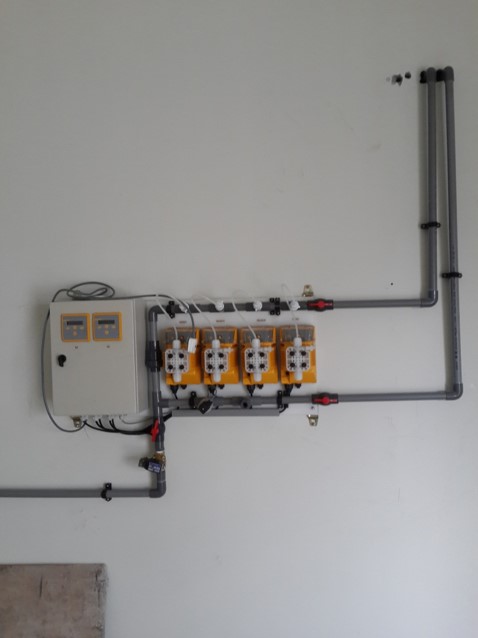
A conductivity controller paired with an automatic bleed-off valve — the simplest way to keep dissolved solids in check on budget-conscious sites that don't require chemical dosing.
View Models