
A dosing pump specified to ±1% accuracy can deliver poor process results if the injection point is wrong. The pump delivers the correct volume. The chemical does not reach the...
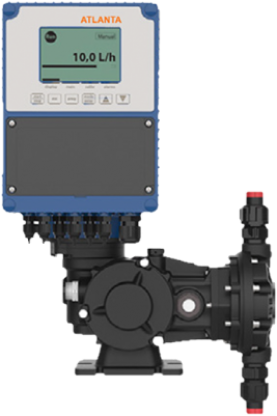
Injecta Atlanta Digital Series
Digital Motor-Driven Dosing Pump
Digital Control, Fitted to Proven Hydraulics
The Injecta Atlanta series pairs a graphic-display electronic control unit with the same motor-driven plunger and diaphragm hydraulics used across the Taurus range — a variable-speed motor governed by the control unit replaces manual stroke-length dosing entirely. The display walks the operator through six dosing modes: constant Manual dosing, proportional dosing to a 4–20 mA or 0–10 Vdc signal, PPM dosing proportional to external flow-meter pulses, Batch dosing, and Timed dosing on a schedule. An RS485 Modbus port, a 4–20 mA retransmission output and a dry-contact alarm relay let the pump report into a SCADA or BMS, while a liquid-level sensor input and remote pause input protect against dry-running and unplanned dosing. Built-in statistics track working time, dosed quantity and power-on cycles, with a password-protected programming menu to lock in settings. Dosing reproducibility is rated at 2% in continuous mode. Water treatment and industrial sites across Malaysia specify Atlanta wherever a process needs automated, traceable dosing rather than a manually set stroke length.
Graphic display, six dosing modes — Manual, mA, V, PPM, Batch and Timed, set and monitored from the control unit
RS485 Modbus connectivity — plus 4–20 mA output and dry-contact alarm relay for SCADA or BMS integration
Built-in dosing statistics — working time, dosed quantity and power-on count, partial and non-resettable total
Plunger or diaphragm hydraulics — same control unit fitted to either pump head, IP55-rated enclosure
Browse by Hydraulic Type
All Digital Motor-Driven Dosing Pumps
Digital Piston Dosing Pump
Atlanta Plunger Series
Digital control on plunger (piston) hydraulics
Graphic-display control unit fitted to a plunger metering pump. A packing-sealed piston with suction and discharge check valves is driven by a variable-speed motor for accurate, repeatable dosing at pressure.
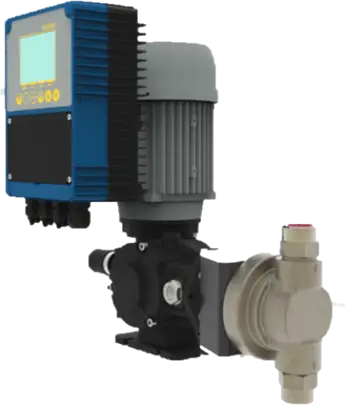
Digital Diaphragm Dosing Pump
Atlanta Diaphragm Series
Digital control on mechanical diaphragm hydraulics
Graphic-display control unit fitted to a mechanical diaphragm metering pump. A PTFE diaphragm isolates the process liquid from the mechanism, driven by a variable-speed motor for consistent, adjustable dosing.